
How to Check Criminal History in Frederick County
No single search produces a complete Frederick County criminal history. Start with the question. A recent arrest points to the sheriff's Police-to-Citizen records and the regional jail. A misdemeanor or an early felony stage points to General District Court. An indicted felony, a trial, or a misdemeanor appeal points to Circuit Court. A Virginia repository report requires the state police process. Each source proves a different fact, so a name match in one system should be checked against the final docket.
Gather the full name, spelling variants, an approximate event date, and any case or report number. Date of birth can help distinguish common names when an official form allows it. Then follow the record from the office that created it to the office that recorded the result.
- Search the likely arrest, custody, or court channel for the event.
- Select Frederick/Winchester when a Virginia court system asks for the locality.
- Record the case number, filing court, charge, and event dates from a likely match.
- Check the final court for the plea, disposition, and sentence instead of relying on an initial charge.
- Ask the proper clerk or records unit for a copy, certified order, or official state check when the online entry is not enough.
Frederick County Records at Winchester Addresses
A Winchester mailing address does not always mean a Winchester city record. Winchester is an independent city, but the Frederick County Judicial Center, Sheriff's Office, County Administration, and Northwestern Regional Adult Detention Center all use Winchester postal addresses. Court systems may also label the lower court as Frederick/Winchester. Searchers who choose a jurisdiction from the mailing city alone can land in the wrong file.
The practical fix is to follow custody, not geography. The clerk holds the docket and filed orders. The sheriff holds its incident, arrest, warrant, and calls-for-service records. NRADC holds regional booking and present-custody material. County Administration runs the NextRequest channel for non-sheriff county records. The Frederick County Sheriff's Office identifies its own divisions and forms, which helps keep a law-enforcement request out of the county administrator's queue.
Frederick County Courts
5 North Kent Street
Winchester, VA 22601
Circuit: 540-667-5770
GDC: 540-722-7208
Sheriff's Records
1080 Coverstone Drive
Winchester, VA 22602
540-662-8961
NRADC
141 Fort Collier Road
Winchester, VA 22603
540-535-3800
Official Virginia Background Checks
The Virginia Department of State Police keeps the central criminal-history repository through CJIS, CCRE, and CARE. For a general public or personal review request, SP-167 is a mailed, notarized name check. The person searched signs and notarizes the subject section. A different recipient must also complete the recipient section. This is not an instant public conviction database, and it does not return the Frederick County clerk's full set of pleadings.
The Virginia-only check costs $15. A combined criminal-history and sex-offender search costs $20, while optional remote online notarization adds $25. VSP reports about 15 business days after receipt and offers no expedited service. Program-specific fingerprint checks use authorized collection. FCSO advertises fingerprinting, but no verified local fee was found, so call 540-662-6168 before visiting.
The Virginia State Police background-check instructions show the official choices and mailing workflow.
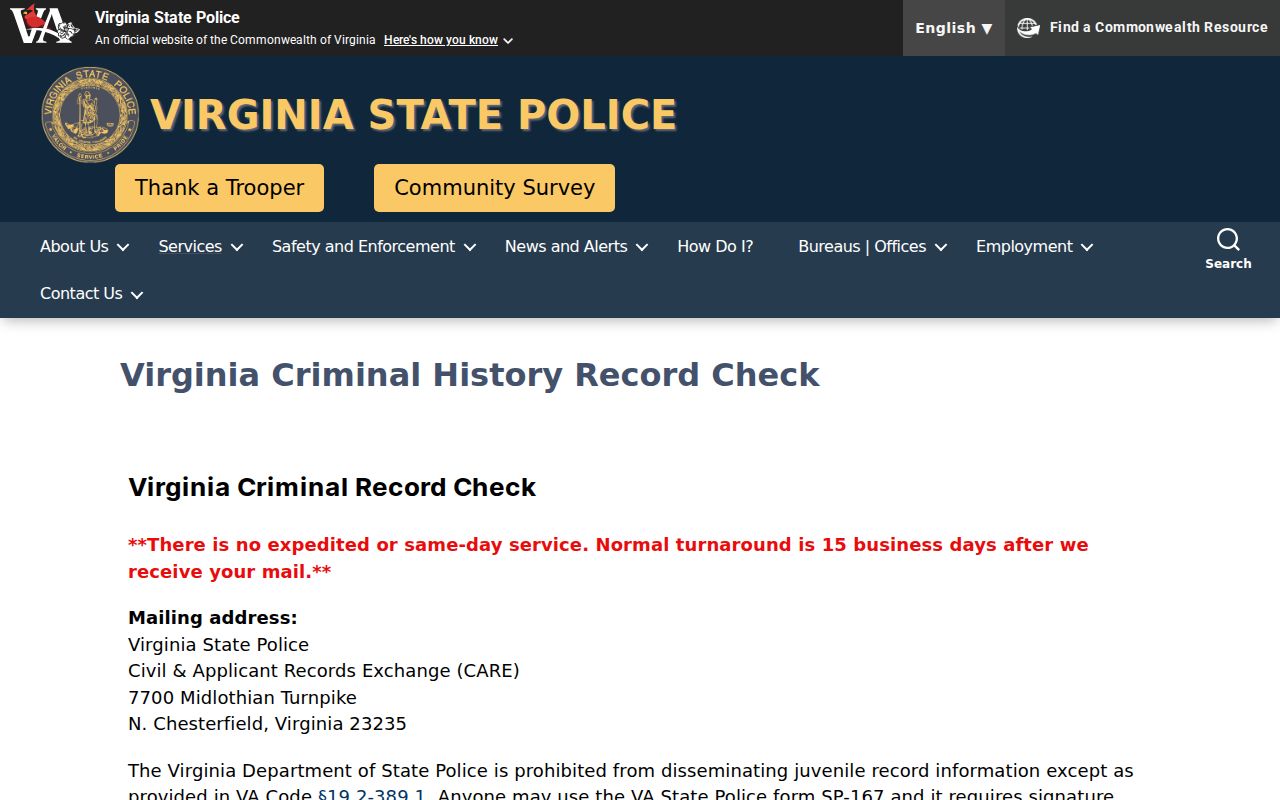
This official screen reinforces the key distinction: a state report is ordered through VSP, while the local courts remain the source for Frederick County case documents.
| Official product | Fee | Key requirement |
|---|---|---|
| Virginia criminal history | $15 | SP-167, signature, notarization, mail |
| History plus registry search | $20 | SP-167 combined choice |
| Remote online notary | $25 extra | Optional generator selection |
| VSP plus FBI components | $27 | Only for a check authorized by statute |
Frederick County Federal Criminal Records
Federal case, identity-history, and custody systems answer three separate questions. Frederick County federal prosecutions fall within the Eastern District of Virginia's Alexandria Division. PACER supplies federal dockets and filed documents through a registered account. The FBI Electronic Departmental Order portal accepts a request for one's own Identity History Summary, which needs fingerprints and an $18 federal fee. The Bureau of Prisons locator covers federal custody, not a Virginia jail stay.
The Eastern District of Virginia is the source for the court layer.
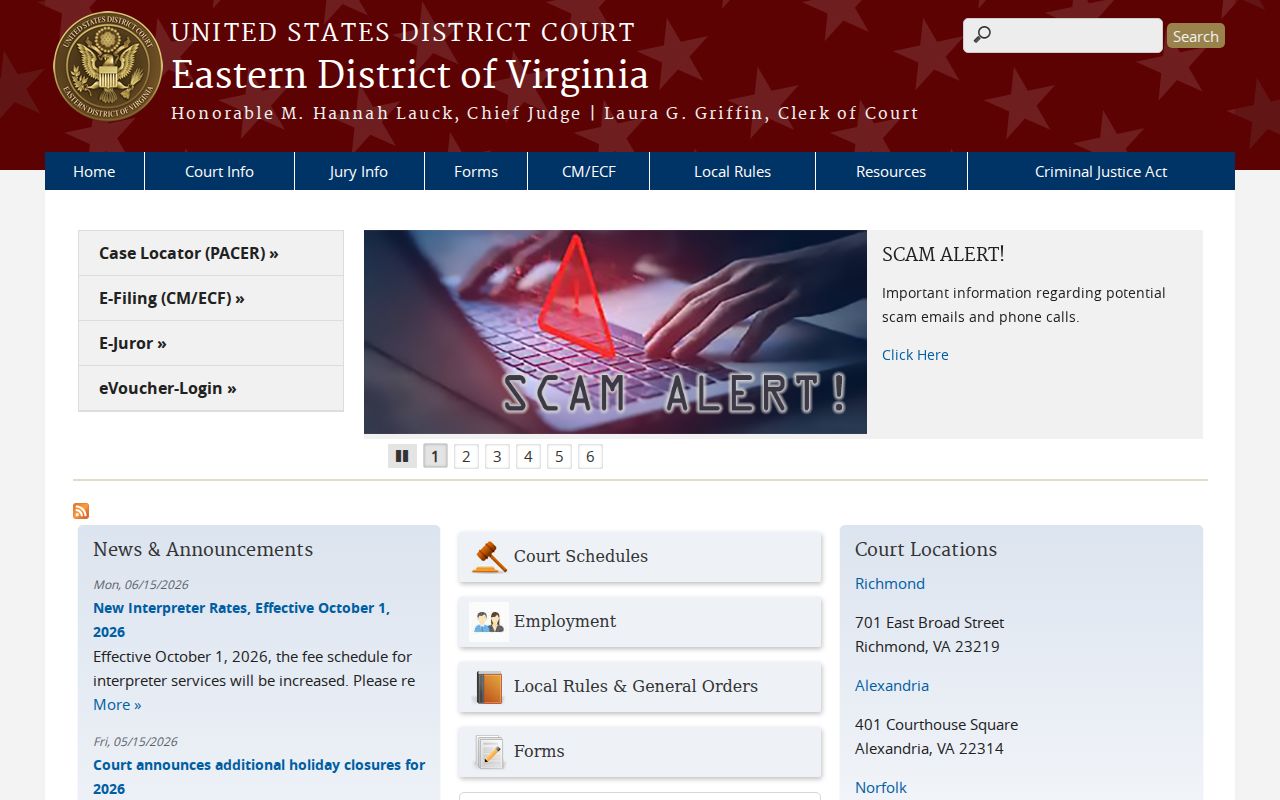
That court layer should not be confused with Virginia OCIS or the local Frederick/Winchester dockets. Federal cases, FBI histories, and BOP custody remain separate from one another as well.
Types of Criminal Records
One Frederick County event can create several records. The arresting officer writes an incident or arrest report. NRADC makes a booking and custody file. A magistrate issues process or decides initial bail. General District Court opens the misdemeanor or preliminary felony docket, and Circuit Court takes a felony after certification or indictment. Fingerprints can form an arrest cycle at CCRE, while the later court disposition should be matched back to that cycle.
These sources should not be treated as duplicates. They describe different stages and can change at different times.
Federal docket access runs through the official PACER system.
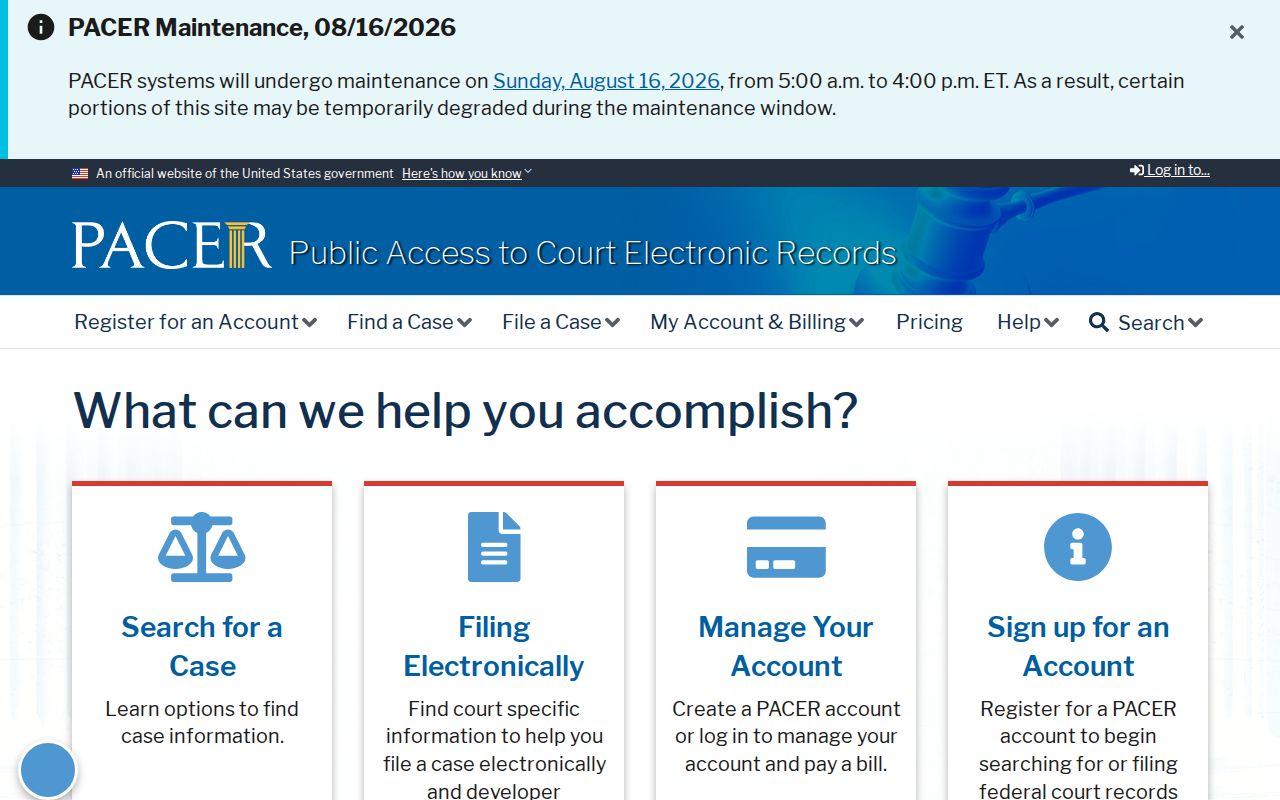
PACER is another distinct record type: it can reveal federal filings and outcomes, but not a Frederick County arrest narrative or Virginia repository report.
- Booking record
- Regional-jail intake, current charges, bond, and custody data. It proves custody, not guilt.
- Court case file
- Clerk-held hearings, filings, plea, disposition, sentence, costs, and appeal information.
- Arrest cycle
- A repository grouping that ties one fingerprint-supported arrest to reported charges and dispositions.
- Capias
- Court process that commands an arrest, often after a failure to appear or comply.
- Registry listing
- A separate statutory record under the Virginia Sex Offender and Crimes Against Minors Registry.
Frederick County Criminal Record Custodians
Ownership is the fastest way to choose a Frederick County records channel. FCSO Records handles the sheriff's existing incident and arrest reports, while the Warrants Unit answers warrant-status questions. NRADC is a regional authority and should receive requests for its own booking and jail records. The Circuit and General District clerks control their case documents. A town police narrative stays with Stephens City or Middletown even if county dispatch and NRADC later appear in the chain.
Request the record by name. An incident report, CAD or calls-for-service entry, 911 audio, body-camera file, arrest report, and booking record are not the same object. Give the event date, place, report or case number, and the precise existing record sought. FCSO accepts requests online, by mail, fax, email, in person, or by phone. A request need not use the word FOIA or be written, though a clear written description can reduce delay.
| Question | Frederick County source | Direct route |
|---|---|---|
| Officer narrative or sheriff arrest report | FCSO Records/FOIA | 540-662-8961 |
| Active warrant concern | FCSO Warrants | 540-662-2921 |
| Current regional custody | NRADC | 540-535-3800 |
| Filed charge or outcome | GDC or Circuit clerk | 540-722-7208 or 540-667-5770 |
What a Frederick County Criminal Record Shows
The fields depend on the record. A CCRE history may show names, aliases, date of birth, physical identifiers, a state identification number, arresting agencies, charges, and reported dispositions. A court file adds its case number, hearings, judge, counsel, bond, plea, orders, sentence, fines, costs, and appeal details. A booking file centers on intake time, current charges, bond, photo and fingerprints, and present custody.
Read the status and source together. An initial charge is an allegation. A dismissal ends that count without a conviction, while nolle prosequi means the prosecution elected not to proceed. A GDC entry marked certified means a felony advanced to Circuit Court after a probable-cause stage. It does not mean the person was certified as convicted.
| Name and identifiers | Display name, aliases, birth information, and repository identifiers where lawful. |
|---|---|
| Arrest and booking | Agency, date, location, intake data, bond, and current custody details. |
| Charges and statutes | Alleged offense, Virginia Code section, and felony or misdemeanor class. |
| Disposition | Guilty, not guilty, dismissed, nolle prosequi, appealed, or another entered result. |
| Sentence | Active or suspended time, fine, costs, restitution, and court-ordered supervision. |
| Custody or supervision | Jail, state institution, probation, parole, or another published status. |
Frederick County Criminal Court Search
Virginia provides several court search layers. General District Court Case Information covers misdemeanors, traffic matters, and felony preliminary stages. Circuit Court Case Information covers participating courts, while OCIS 2.0 adds a statewide search layer. The Judiciary warns that no one public search includes every circuit file. Older matters, spelling differences, a nonparticipating court, and recent data entry can all produce an empty result.
The Virginia Judiciary online services directory is the official starting point.
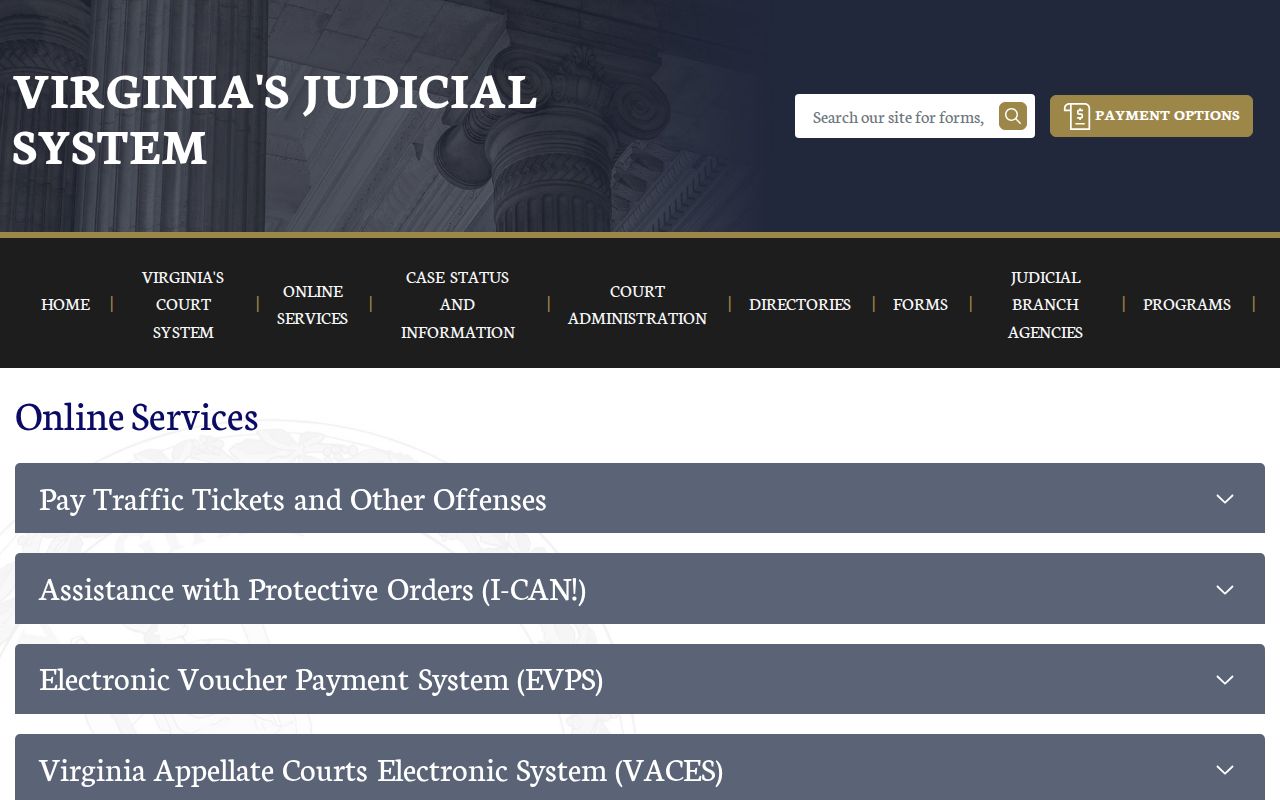
The menu separates the systems, which matters when a Frederick County felony moves from the district court to Circuit Court. Search by locality and name, case number, or hearing date where offered. Public juvenile case information is excluded.
The statewide layer is the official OCIS 2.0 search.
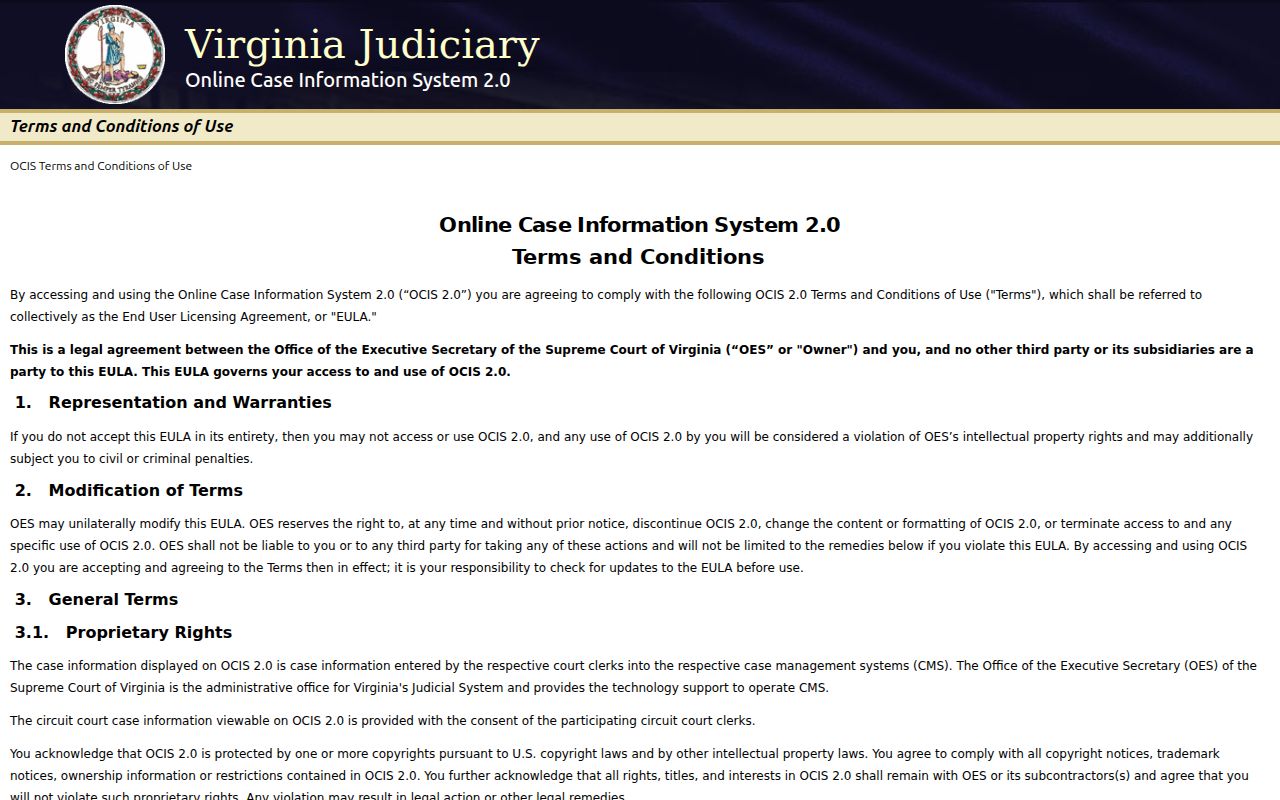
Use the case number from a likely result to follow the file into its final court, then contact the clerk when the docket omits the filed document itself. OCIS cannot take payments, and free dockets generally do not provide every pleading. The courthouse counter at 5 North Kent Street remains the fallback for copies and certified orders.
Public Access Laws
Virginia law separates public-body records from a general criminal-history report. The Virginia Freedom of Information Act supports access to existing public records, subject to exemptions and eligibility rules. Specific provisions control law-enforcement material, including investigative records, victim or witness details, juvenile content, tactics, and protected identifiers. An office can redact an exempt part while producing the balance.
FCSO generally must make an initial response within five working days. It can produce, cite a lawful withholding rule, release a redacted record, say the record cannot be found, or invoke seven more working days when production is not practical. Criminal investigative files can qualify for a longer statutory extension. Actual-cost fees apply, and an estimate above $200 may require a deposit.
Key Virginia laws:
VFOIA, Va. Code § 2.2-3700 et seq. sets the public-record framework and its exemptions.
Va. Code § 2.2-3706.1 governs law-enforcement and criminal investigative records.
Va. Code § 19.2-389 controls dissemination of CCRE criminal-history information.
Va. Code § 9.1-132 lets a subject inspect and challenge their own Virginia record.
Frederick County Criminal Warrant Records
No official public Frederick County active-warrant database or statewide public Virginia e-warrant search was found. Use the fallback chain. Call FCSO Warrants at 540-662-2921, search the relevant court file for a capias or failure-to-appear event, ask the issuing clerk, and submit a specific sheriff records request when a public document may exist. Online delay, sealed process, juvenile protection, and unserved investigative needs can limit what is disclosed.
A warrant type changes what the record means. An arrest warrant alleges probable cause for an offense. A bench warrant or capias often follows a failure to appear or comply. A search warrant authorizes a search and may stay sealed during an inquiry. Anyone resolving their own warrant should contact counsel or the issuing court and sheriff before appearing, confirm the surrender location and bond terms, and obtain written proof of the final result.
Note: The anonymous Crime Solvers tip line is not a warrant-status or records-request channel.
Sealed, Expunged & Restricted
Juvenile case information does not appear in Virginia's public online case search. Sealed matters, victim data, Social Security and account numbers, and protected investigative material can also be removed or redacted. A missing public result therefore does not prove that no record exists. It may reflect a restriction, a system gap, retention outside the portal, or a file that requires a clerk request.
Under the version of Va. Code § 19.2-392.2 in force before December 1, 2026, a qualifying petition may follow an acquittal, nolle prosequi, dismissal, or an identity-theft circumstance. The petition goes to the circuit court where the charge ended. Frederick filings belong at Circuit Court, and the current subsection A process has no court fees or costs. The petitioner should use the current Virginia court forms and confirm the version with the clerk.
Virginia's revised law takes effect December 1, 2026, alongside a distinct sealing framework. Automatic and petition-based sealing have detailed offense-date, waiting-period, and exclusion rules. Do not infer eligibility from a short docket entry. A dismissal also does not erase an arrest or booking entry by itself. The official Virginia expungement statute displays the effective versions that govern the filing date.
Frederick County Criminal Custody Records
NRADC holds people booked from Frederick County as well as Clarke and Fauquier counties and independent Winchester. Its official inmate route is the first place to check present regional-jail custody. Call 540-535-3800 if the vendor search does not return a clear match. After transfer to state custody, or when probation or parole supervision is the question, use the VADOC Inmate and Supervisee Locator.
The first local record path follows a set sequence: arrest and property inventory, magistrate review of bond, booking and screening, phone access, arraignment on the next regular court day, and classification within 72 business hours. Old Dominion Court Services can conduct pretrial screening before that first appearance. The VADOC facilities and field-office directory identifies the state custody and supervision network.
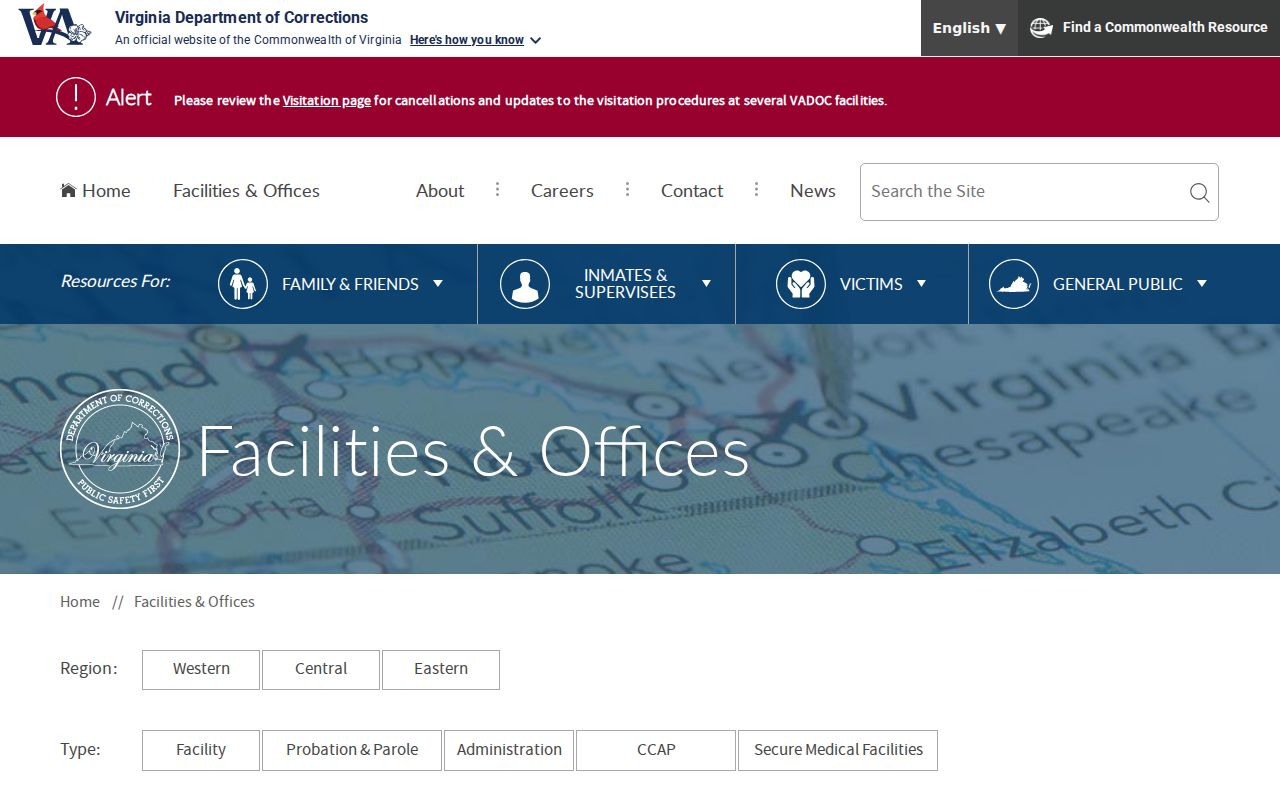
For Frederick County, District 11 in Winchester is the state probation and parole office, while Old Dominion Court Services is the separate local pretrial and community-corrections layer.
The VADOC Inmate and Supervisee Locator updates daily and accepts a full last name plus the first three letters of the first name, or a seven-digit DOC number. Filters include location, race, gender, and age range. Its disclaimer warns that public status data can be incomplete or out of date.
Criminal Records by City in Frederick County
Frederick County has two incorporated towns, not three cities for page-building purposes. Stephens City and Middletown police create their own local reports, but neither town has a municipal court. Their non-felony arraignments route to Frederick/Winchester General District Court on Monday afternoons, while NRADC holds regional booking records. Independent Winchester is not part of the county even though many Frederick offices use Winchester mailing addresses.
Each town record search should begin with the agency that made the report, then follow any booking to NRADC and any filed charge to the shared courts.
Stephens City Criminal History
Population 2,016 · Town police reports stay with the town; county dispatch, NRADC, and shared courts supply later records.
Middletown Criminal History
Population 1,355 · Calls begin with county dispatch, while the town clerk manages Middletown FOIA requests.
Correcting Frederick County Criminal Records
A court file, booking entry, and CCRE history can disagree because each system updates on its own schedule. Name variations and a disposition that has not yet matched to the fingerprint-supported arrest cycle can leave an event looking open. First compare the exact case number, arrest agency, charge, and disposition date. The final court's certified order is stronger proof of the case outcome than an old booking label.
VSP directs an error concern to the arresting agency, and Virginia law gives the record subject a formal right to inspect and challenge their own criminal-history information. Ask the displaying custodian what document it needs. When expungement or sealing applies, keep a certified order and verify the result separately with the court, sheriff or jail, and VSP after processing. One correction does not always update every system at once.
For personal federal record review, begin at the FBI Identity History Summary portal.
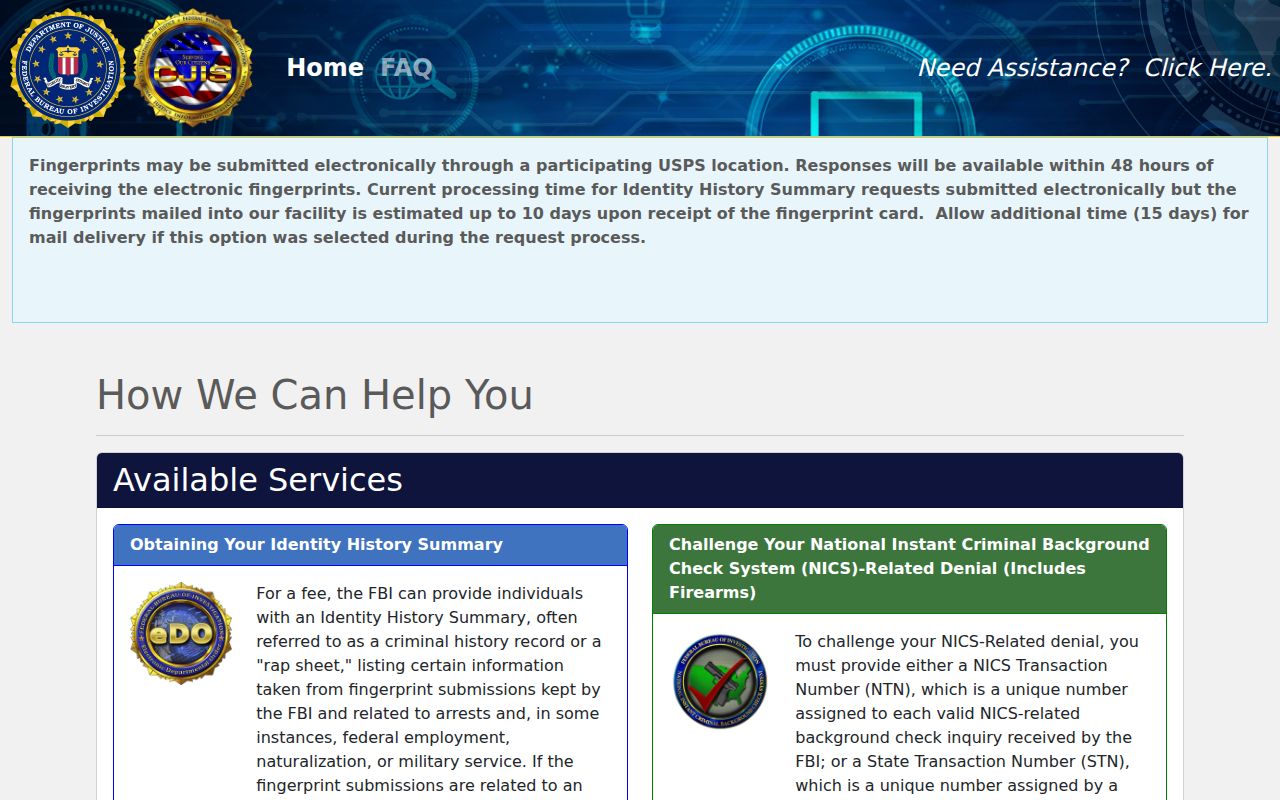
The fingerprint-supported summary reaches beyond Frederick County, yet correcting it follows a different route from fixing a local clerk or jail display.